Real AWC work, explained
Does the quote stop at the pipe or finish the room?
See four real AWC drain-pipe and wall-restoration stages, then compare what a repair proposal includes from access through painted finish.
The pipe work and the room restoration are separate parts of the scope. This AWC sequence follows a cracked drain, waste and vent pipe through a later piping stage, wall restoration and a painted finish. Use the stages to ask where your quote ends and who handles each handoff.
Look closer
Read each stage of the work.
Look at what is visible, then use the question beside it to clarify your own repair.
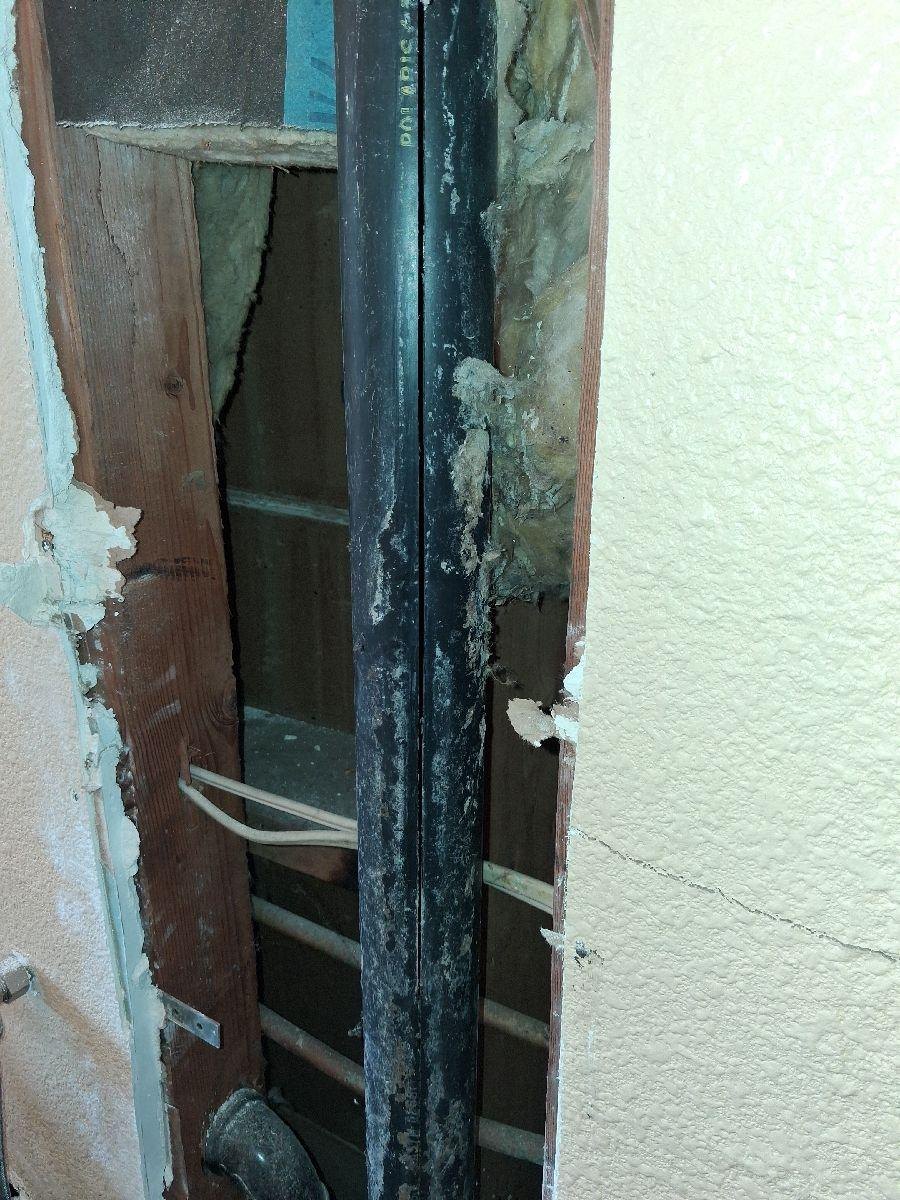
Stage 01 / 04
Open access
- Notice this
- A long vertical crack is visible in the black pipe, with framing alongside it.
- Why it matters to the scope
- Access is part of the repair conversation. The opening reveals piping, framing and nearby utilities, while the surrounding room still needs protection and a defined restoration boundary.
Ask before you approve
What access is included, and who handles the surrounding room?
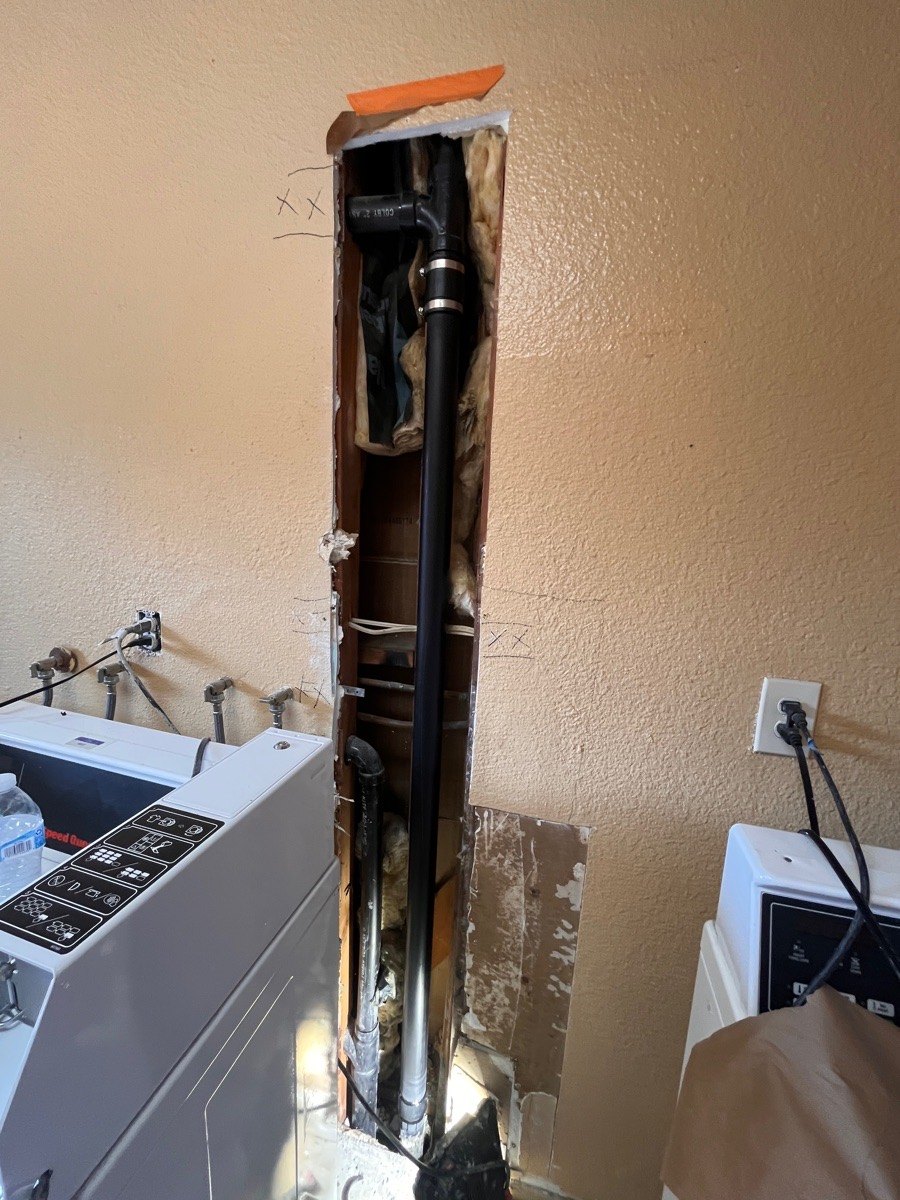
Stage 02 / 04
Pipe work
- Notice this
- The wall opening extends down beside the laundry appliance, with the pipe and its connections visible inside.
- Why it matters to the scope
- The proposed pipe work should have a clear endpoint. Before closure, ask which records explain what was addressed and what checks were completed.
Ask before you approve
What pipe work and verification are included before the wall-restoration handoff?
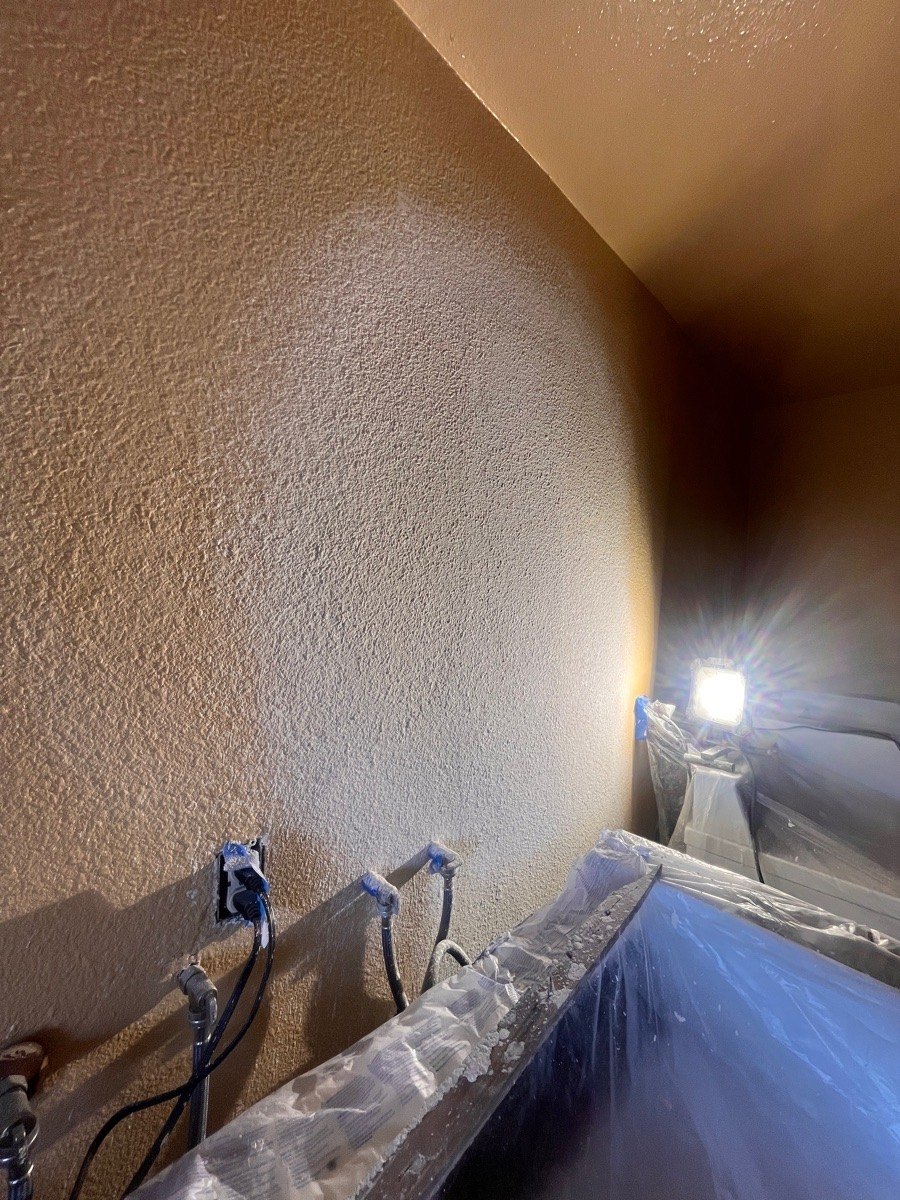
Stage 03 / 04
Wall restoration
- Notice this
- The wall has a continuous textured surface. Protective covering remains over the fixtures and nearby appliances.
- Why it matters to the scope
- A patched opening and a finished wall are different deliverables. The proposal should explain whether it includes texture work and how the repair will meet the surrounding surface.
Ask before you approve
Does the restoration scope include texture, and what area will be finished?
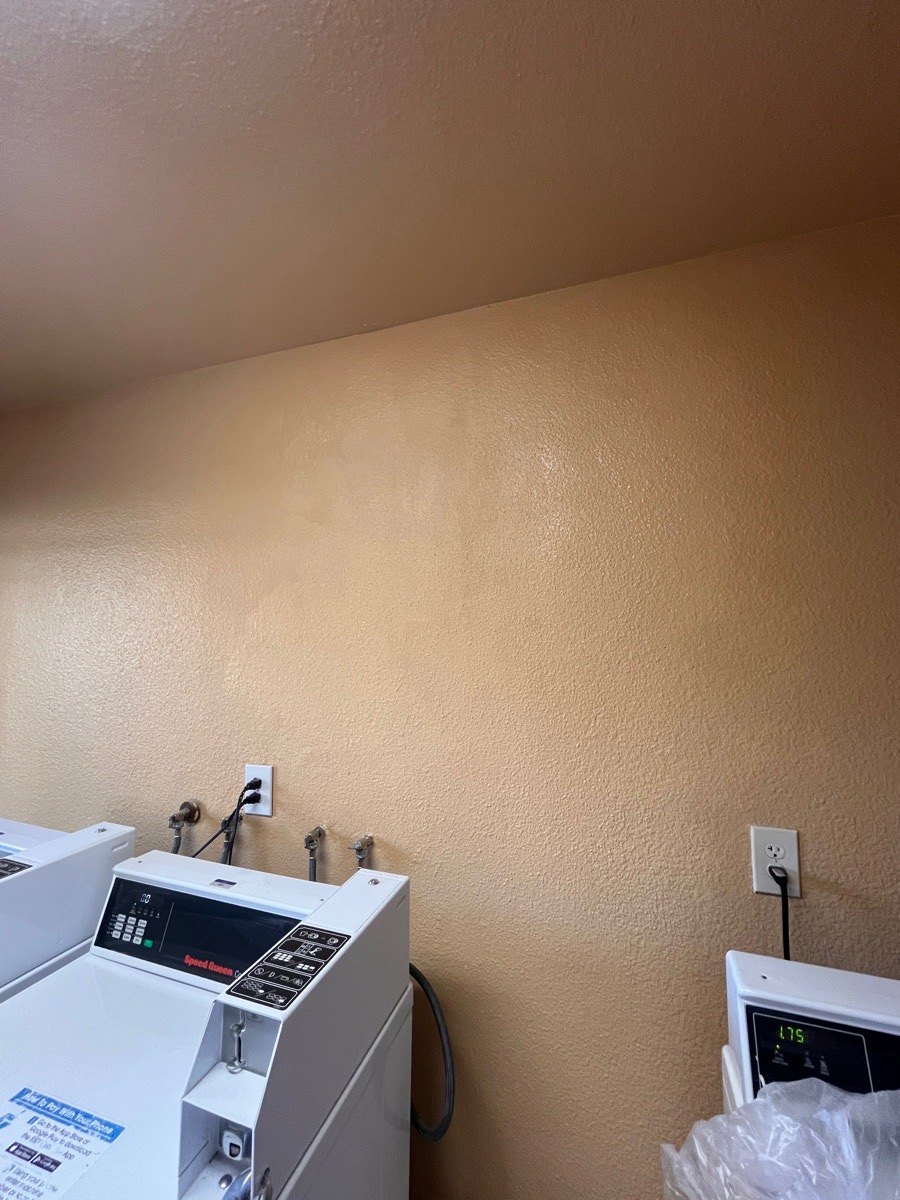
Stage 04 / 04
Painted finish
- Notice this
- The access opening is covered, and a painted wall is visible above the laundry appliances.
- Why it matters to the scope
- The visible endpoint makes the scope easier to compare. Agree whether painting covers the patch, a defined section or the full wall; do not leave that choice to the last visit.
Ask before you approve
What paint area and final room condition are included in my proposal?
These are authentic AWC stages of cracked DWV pipe repair and wall restoration. The sequence does not document clog removal, sewer replacement, the test method, an inspection result or final customer acceptance. It does not establish the cause of a different property's drain problem.
Turn the photos into a better proposal
Compare the endpoint, not just the pipe line item
Use the photos to identify work that can otherwise fall between a plumbing quote and a finish-repair quote.
Access and room protection
Identify the opening, nearby surfaces and any appliance or fixture access arrangements. State which contractor is responsible for these tasks.
Who prepares the room and returns any moved items to the agreed condition?
Piping and the closure handoff
Name the pipe work and the verification records to be provided. Make the decision to close the opening an explicit handoff rather than an assumption.
Who confirms the pipe work is ready for the next stage?
Wall, texture and paint
List each finish stage and its boundary. Two proposals may describe the same pipe work while leaving very different amounts of room restoration to the owner.
Where does this quote stop, and what work would still be mine to arrange?
Your next repair conversation
Four questions worth taking with you.
Use these with AWC or another contractor. Ask for clear answers in the written scope.
ClogAid · All World Construction LLC
619-327-9513 · CSLB 1063936
https://clogaid.com/repair-in-photos/
- Does the quote include opening and restoring the wall?
- What pipe checks or records will I receive before closure?
- Are texture and painting included, and over what area?
- Who coordinates the handoff if different trades do the work?
Keep learning
Go deeper on the decision.
Photo sources & context
Authentic AWC work photographs. Captions describe the documented stage; each property needs its own assessment.